

Japanese kitchen knives are globally recognized for their craftsmanship, precision, and quality. For Hokiyama, standing out in this highly competitive and tradition-driven market means constantly pushing boundaries.
As part of this ambition, Hokiyama recently introduced a new series of kitchen knives built on a clear idea: combining proven craftsmanship with new materials to create something unique.
“We are trying to create something unique—truly original kitchen knives,” says Mr. Muta, Manager, International Division Sales at Hokiyama. “Many manufacturers use the same steels, such as VG10. So we are looking for something different, something new—and we found it in Alleima® 19C27.”
Hokiyama actively explores new materials and combinations to create distinctive products. This ambition led them to a close collaboration with Alleima and Aichi Techno Metal Fukaumi.
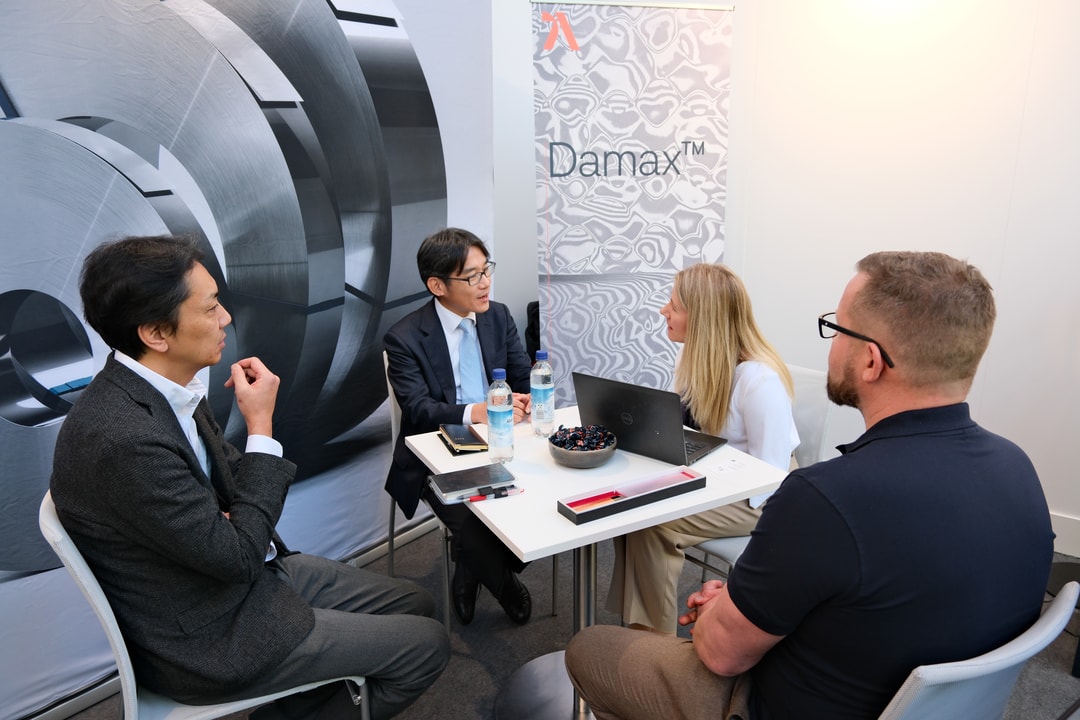
A collaboration built on complementary expertise
Hokiyama brings generations of knife-making expertise and a deep understanding of end-user needs. Alleima contributes advanced steel grades with proven performance and consistency. Aichi Techno Metal Fukaumi is a key manufacturing partner as a cladding specialist—developing the laminated blade material used in the final product. Based on Hokiyama’s requirements, they produce the cladded material using Alleima® 19C27 as the core steel.
Understanding the Japanese knife market: The role of Warikomi
In the Japanese knife market, laminated blade constructions are widely used. A common technique is known as Warikomi—a three-layer structure where a hard core steel is combined with outer layers that add functionality such as toughness, corrosion resistance, or aesthetic appeal.
In Hokiyama’s new knife series, Alleima® 19C27 is used as the core material, providing the cutting edge, while Aichi Techno Metal Fukaumi develops the surrounding cladded layers.
This combination optimizes both performance and design—meeting the expectations of professional users.
Why Alleima® 19C27? A balance of performance and originality
When selecting materials, Hokiyama looks for both performance and differentiation.
“Alleima has a strong reputation, and Swedish steel is well known. That makes it unique in Japan,” Mr. Muta explains.
The decision was also driven by a desire to introduce something not widely used in the Japanese kitchen knife segment.
“Nobody was using this kind of steel for kitchen knives in Japan—that made it interesting. At the same time, it’s not too unknown. It has a strong reputation, so customers can trust it.”
This balance—between innovation and reliability—was key.
Performance that matters: Sharpness and re-sharpening
For Hokiyama, the most important properties of a knife are clear: cutting performance and ease of sharpening.
“A kitchen knife needs to cut—that is the most important thing. And sharpening,” Mr. Muta emphasizes.
This reflects an important insight: even the most advanced steel must remain practical for everyday use. A knife that is difficult to re-sharpen can limit its usability for everyday consumers. Alleima’s steel helps strike the right balance between edge retention and maintainability.
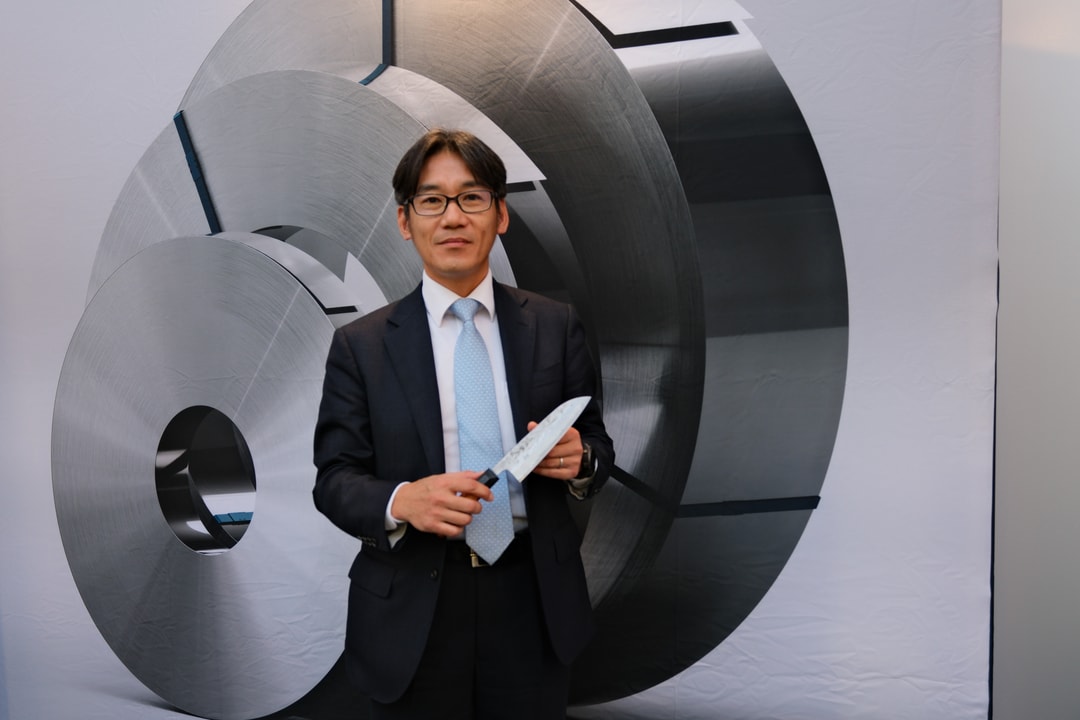
Craftsmanship over branding
Interestingly, Hokiyama places less emphasis on brand visibility and more on product quality.
“Customers recognize that our knives are good—but often not the brand,” Mr. Muta says. “What matters most is making a very good knife.”
Their business model often involves supplying knives to retailers. Success is therefore measured by end-user satisfaction rather than brand recognition.
“If the shop thinks it’s a good knife and sells it, and the customer is satisfied—that is what matters.”
Meeting demand for differentiation
Across the value chain, one trend stands out: the growing demand for uniqueness. Aichi Techno Metal Fukaumi plays a key role in enabling this by combining core materials and cladding layers into unique solutions.
“Our job is to create unique combinations that meet customer demand,” says Mr. Hatano, Aichi Techno Metal Fukaumi.
Looking ahead: Co-developing the next generation of knife steel
The collaboration between Hokiyama, Aichi Techno Metal Fukaumi, and Alleima goes beyond current products—it’s also about future innovation.
“We would like to collaborate to develop new blade materials,” Mr. Hatano states.
Alleima supports this ambition with deep metallurgical expertise and advanced capabilities, including: access to high-tech laboratory testing, microstructure analysis and material property validation.
‘We actively explore opportunities to further develop new grades,’ adds Daniel Larsson, Segment Manager at Alleima. ‘Material development is an ongoing process for us.’”
A shared commitment to quality and innovation
By combining Japanese craftsmanship from Hokiyama, cladding expertise from Aichi Techno Metal Fukaumi, and Alleima’s advanced steel solutions, this collaboration is setting new standards in a mature market.
As Hokiyama puts it: “We keep developing something new—that is important.”