

We understand that disc spring play a crucial role in the shipping industry. These components, although often overlooked, are central to stabilizing loads, absorbing heavy impacts and protecting valuable cargo from damage.
.
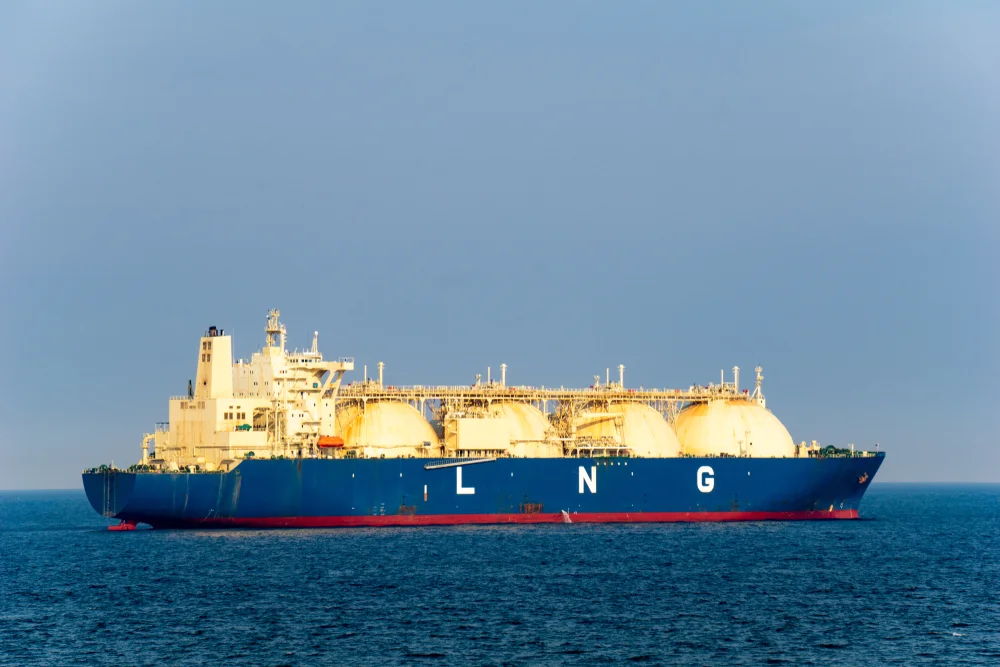 Liquefied natural gas (LNG) carrier with 4 LNG tanks sails along the sea. Credit: Shutterstock
The importance of material selection for disc spring
The choice of material is critical to ensure the longevity and reliability of disc springs in marine environments. Not all steels are created equal; their composition directly impacts how they perform under demanding conditions. Key properties such as elasticity, yield strength, and resistance to mechanical fatigue are essential for disc springs to function reliably under continuous and cyclic loading. This constant compression and decompression can cause material fatigue, gradually reducing the steel’s ability to return to its original shape. Additionally, fluctuations in temperature lead to expansion and contraction, which may compromise the structural integrity of the disc spring.
The consequences of disc spring failure on a ship can be serious. In cargo holds, a failed disc spring can result in uncontrolled shifting of cargo, leading to potential damage, financial loss, and safety risks. In engine assemblies, failing disc springs can cause excessive vibration, resulting in mechanical inefficiencies and increased maintenance needs.
Our solution: 9RU10 - A high-performance stainless steel
To address these challenges, we have developed 9RU10 – a high-performance, hardenable stainless steel specifically engineered for demanding applications where strength, elasticity, and fatigue resistance are critical. Unlike conventional spring steels, 9RU10 undergoes a specialized heat treatment that enhances particle precipitation within its microstructure, significantly improving resistance to repeated stress.
Mikael Hansson, Product Specialist at Alleima, explains:
“All our spring steels are rigorously evaluated for fatigue resistance through extensive testing in our advanced R&D facility. During production, we maintain strict control over the mechanical properties, which are crucial to the fatigue performance of the material.”
Another key advantage in shipbuilding is the ability to tailor mechanical properties.
“We can customize the material to meet the specific demands of each application,” Hansson adds. This flexibility allows shipbuilders to optimize performance across various components — whether in suspension systems, engine mounts, or load stabilizers — ensuring each part fulfills its specific function.
Looking ahead: Sustainability in focus
Sustainability is becoming an increasingly important factor in material selection across industries, and marine technology is no exception. In 2024, our 9RU10 steel contained an average of 82% recycled content. We are also committed to the Science Based Targets initiative (SBTi), with both short- and long-term plans to reduce CO₂ emissions by 2030 and reach net-zero by 2050.
As global trade continues to grow, the demand for safe and efficient freight transport remains strong. While disc springs may not receive the same attention as cutting-edge navigation systems or propulsion technologies, their role in maritime logistics is vital. By ensuring cargo stability, minimizing damage, and supporting key ship functions, disc springs play a silent but essential part in keeping the world’s goods moving safely across the oceans.