A value-creating and sustainable business model
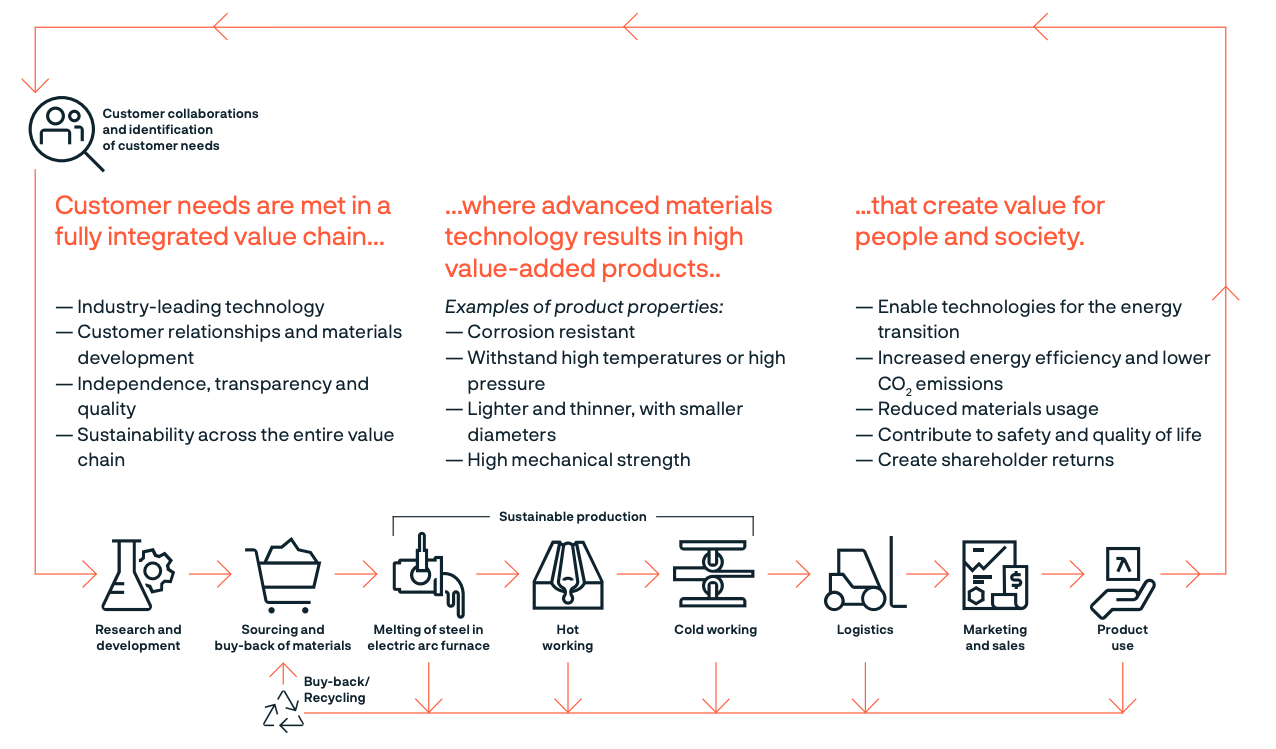
Alleima’s business model aims to deliver profitable growth and create added value for our stakeholders. Sustainability is a key and integral part of the entire value chain.
Technological innovation and customer collaboration
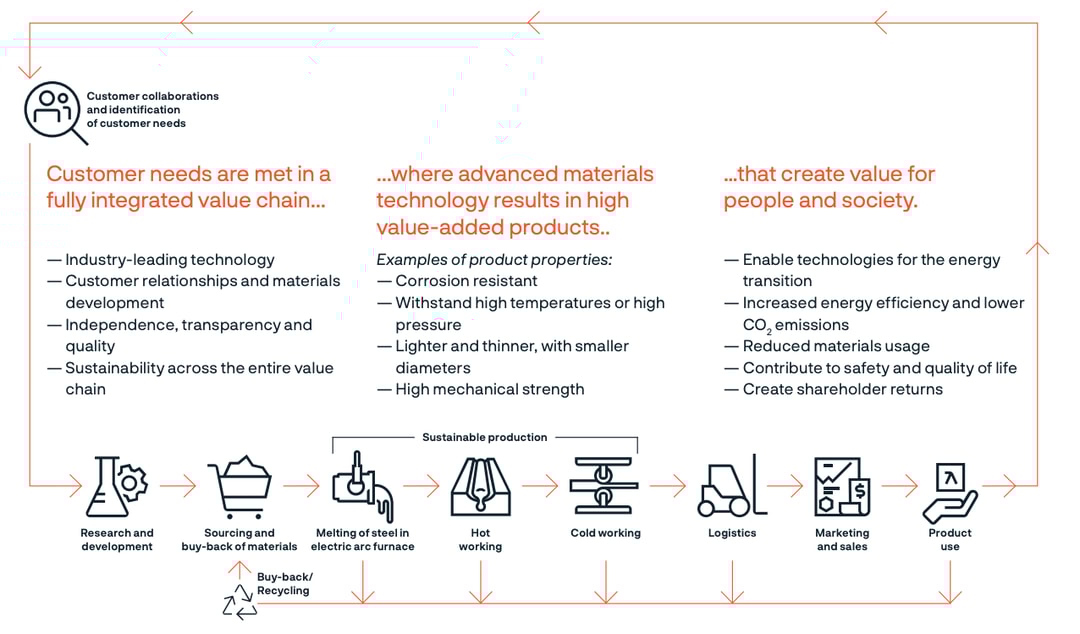
Alleima’s value chain is based on a focus on innovation. With industry-leading technology and through continuous R&D, often in close collaboration with customers, the company develops material and process solutions that contribute to higher energy efficiency, lower CO2emissions, and increased circularity, safety and quality of life.
Sourcing and circularity
Responsible material sourcing is combined with programs for buying back raw materials from customers and extensive internal recycling flows. This includes both scrap metal and waste heat, which minimizes resource use and strengthens the
circular economy within the company.
Sustainable production
The company’s steel production uses 100% fossil-free electricity and its endproducts are largely made from recycled materials. Residual products from the melting process are recycled and returned to the material flow. High CO2efficiency is achieved during hot working by blending in biogas and using electric furnaces, while continuing to recover metal from residual flows. In cold working, products are further refined with a continued focus on resource efficiency.
Efficient logistics
Electric and biofuel-powered vehicles are used for internal logistics and material handling, and external transportation is continuously optimized based on sustainability criteria.
Ethical marketing and sales
Marketing and sales are conducted according to the company’s ethical guidelines, and life cycle assessments are provided for several product segments to support customers’ environmental assessments.
Customer value and benefits for society
Alleima’s advanced materials technology makes customer products and processes safer, more sustainable and more efficient, and has a positive impact on society. The use of Alleima’s products contributes to tangible sustainability improvements for customers through increased energy efficiency, lower CO2emissions, reduced material consumption and improved safety.